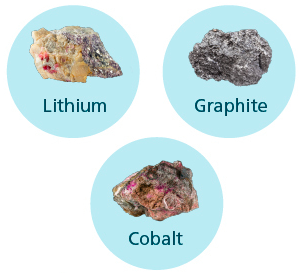
Lithium (Li) is a lightweight, highly reactive metal that plays a vital role in energy storage, high-tech industries, and advanced materials. It is best known for its use in lithium-ion batteries, which power electric vehicles (EVs), portable electronics, and renewable energy storage systems. With the global shift toward clean energy and decarbonisation, lithium has become a critical mineral for the modern economy
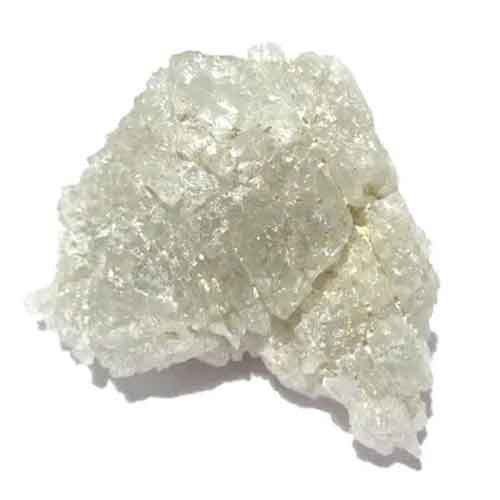
Pollucite is a zeolite mineral with the formula (Cs,Na)2Al2Si4O12·2H2O with iron, calcium, rubidium and potassium as common substituting elements. It is important as a significant ore of caesium and sometimes rubidium. It forms a solid solution series with analcime. It crystallizes in the isometric - hexoctahedral crystal system as colorless, white, gray, or rarely pink and blue masses. Well formed crystals are rare. It has a Mohs hardness of 6.5 and a specific gravity of 2.9. It has a brittle fracture and no cleavage.

A grey-white, hard, brittle metallic element, Mn. Manganese does not occur uncombined in nature, but its minerals are widely distributed. Pyrolusite (MnO2) and rhodochrosite (MnCO3) are the most common minerals. It is used to form many important alloys, especially with steel, aluminium, and antimony; used in dry cells and glass, and in the preparation of oxygen, chlorine, and medicines.
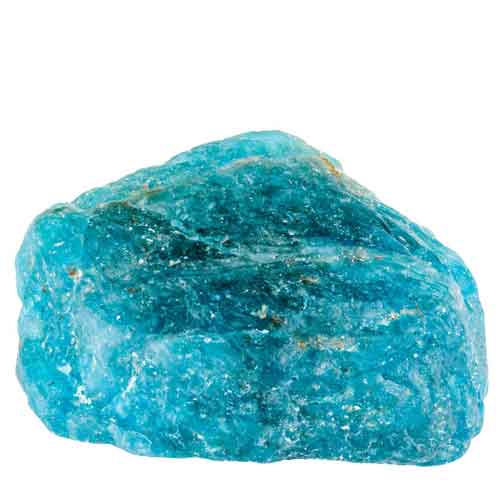
Phosphate rock is a general term referring to rock with high concentrations of phosphate minerals, most commonly those of the apatite family with the general formula Ca5(PO4CO3)3(F,OH,Cl). Ninety percent of phosphate mined is used to produce chemical fertilisers. Phosphorus is one of the three major nutrients required by plants, controlling the transfer and storage of energy at the cellular level and playing an important role in metabolic processes.

Iron ore consists of rocks and minerals containing economically extractable iron, primarily hematite (\(Fe_{2}O_{3}\)) and magnetite (\(Fe_{3}O_{4}\)), which are iron oxides, alongside other minerals like goethite, limonite, and siderite, forming sedimentary deposits rich in these iron-bearing compounds. These deposits are mined globally, crushed, and then smelted to produce the iron for steel, crucial for construction, vehicles, and countless other products, making iron one of Earth's most vital elements.
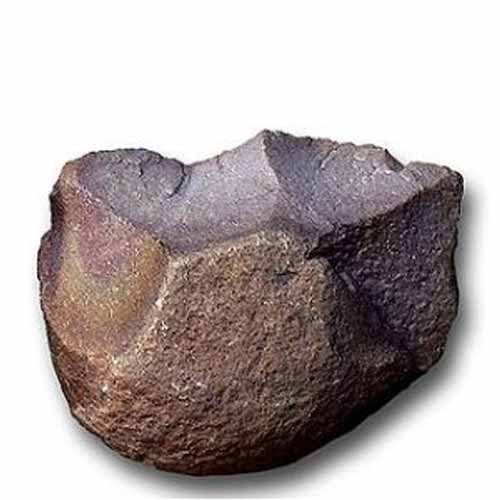
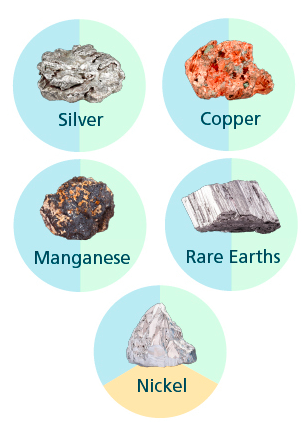
Energy earth minerals are crucial elements like lithium, cobalt, nickel, copper, and rare earths, essential for clean energy technologies (EV batteries, wind turbines, solar panels) and power grids, driving massive demand for a sustainable future but also presenting supply chain, environmental, and geopolitical challenges. Key minerals include battery components (lithium, cobalt, nickel, graphite), magnets (rare earths like neodymium), and conductors (copper, aluminum).